Wednesday, 27 June 2018

Suffolk - The Rest!

We of course went up to Dunwich Heath looking for Dartford Warbler, and were rewarded with a few sightings, not very close but good views through the bins. It was a hot day and so photography was made even more difficult, when the camera decided to take a photo that is, so a very poor record shot only.

Otherwise it was pretty quite on the heath, a few Stonechat about, then a nice Whitethroat singing in the gorse,
and a very confiding young rabbit, came to see us while we had an ice cream, puchased from the National Trust Cafe.

Other places visited were Dursham Marshes, Dunwich Forest, Dunwich Beach and Hen Reedbeds.

I'll start with Dursham Marshes, this is a lovely Suffolk Wildlife Trust reserve, with a nice circular walk. Plenty of Butterflies, a bit quiet on the birding front, but we did get a fly over of a Hen Harrier, so that was brilliant. After suffering a further mishap with the camera no photo of the Hen Harrier or any of the other birds seen.

Dunwich Beach was lovely, we sat on one of the sea facing benches and had a very late lunch, seeing Avocet, Sandwich Tern, Gulls and Oystercatcher flying along the shoreline. We decided not to go for a long walk up Dingle Marshes as it was getting late in the afternoon, we did get some good views of a Kestrel though and Skylark, we returned to the benches with an Ice Cream and found a Common Scoter floating around offshore.

Now to Dunwich Forest (not the same day!) I had read on the RSPB website that there is a hide overlooking Dingle Marshes accessible from the Forestry commission car parks, So we went for this one of the mornings. It was along walk on a hot day... The forestry maps gave no indication of the distance, but we went for it. Despite the paths being quite open for the most part we saw very little, just a distant Muntjac on the track ahead,
plenty of Butterflies again,
yes the camera decided to work this time!

We eventually found the hide, it would be easy to miss off the track as it isn't sign posted, so we went in and were very disappointed. The view was over a small reed bed, to some trees. So the view was actually non-existant! We had a very brief view of a Marsh Harrier as it came over the hide and went over the trees ahead, so that lasted about 2 seconds. We stayed for a coffee, of course, and saw not a single bird in the time we were there. So then it was the long trek back, only seeing a Jay on the way. We won't be going back.

So that leaves us with Hen Reedbeds near Wangford. This a marvellous reserve, in two parts. From the car park is a platform about 100 yards away maximum, overlooking the reed beds. There was plenty of activity. Hobby, Lapwing, Marsh Harrier, Bearded Tit, Sedge and Reed Warbler, Reed Bunting. We called in here a couple of times on the way back to our digs, for a later afternoon cuppa.
This one of the resident Lapwings.

The last day of our stay we explored the Hen Reedbeds further, leaving the car park via a path under an archway, you pop out back on the road, cross to the path on the other side, then enter the reserve again, walking along a dyke, to a viewing platform overlooking more reed beds to your left, and with the river viewable from the dyke to your right. Following the dyke our now accessible lower path, you can carry on to two hides again overlooking the reed beds, with steps at each back up onto the dyke to view the river and estuary.

From the first hide on our first visit Redshank, Shelduck, Lapwing, Mute Swan, Mallard and a little egret were seen. We had coffee of course before continuing to the second hide, not much was seen from here on the first visit. The third hide was visible over the other side of the reed beds, so carried on to this along a recently mown track, this made walking a bit more arduous as the cuttings were fairly deep.

We had lunch at hide number three, with good views of Marsh Harrier, but again little else.
On the walk nack to hide no. 2. We heard a Cuckoo and had a brief sighting as it flew off to our left. We dropped into hide 2 again as the Marsh harrier had been very active.

We were watching quite a bit of Warbler activity when a Cuckoo landed on a wire about 80 yards from us, that ran over the reed beds, it stayed a while, watching one Sedge Warbler in particular, the Cuckoo then dropped down onto some bramble about 10 yards from where the Sedge Warbler was constantly visiting. The cuckoo the waited until the warbler departed and it dropped down onto what we can only assume was the nest. So putting two and two together we can only assume that the cuckoo was leaving a present of an egg behind. Wildlife in action...... brilliant!

We finally stopped in hide one again for tea! To be treated to a Water rail putting in an appearance, just sad that my camera didn't fire!
These are the only pictures that I manged that day.
Reed Bunting
 and Poppies!

So I think that is it. A great week was had, apart from Dunwich Forest, but you live and learn.

Wednesday, 20 June 2018

Suffolk- RSPB Minsmere

We spent a week in Suffolk earlier this month, staying just outside Lowestoft. We were keen to visit RSPB Minsmere again, as it was three years since our last visit. We operate a rota system for places to visit in the spring, just can't fit them all in!

So I will do a summary for Minsmere as we visited it 3 times over the week, then do another post for the rest. The first visit ended up being in thick sea mist on the coastal side of the reserve so we ended up concentrating on the woods, Bittern Hide and Island Mere, where we did get some sun for an hour before the mist thickened up again.
So photos are few and far between for day one, plus my camera is still playing up. (Gone for repair now!) Anyway I managed to get a Bittern, as you can see its a bit hazy due to the mist..
 A rare moment of sunshine found a Whitethroat singing, but no matter where I stood he hid his head from the camera.
 At least this cormorant stood still.
 Then as we were heading 'home' this young Rabbit posed for us in the car park.

Next day we returned with better weather, this time we circumnavigated the scrapes, disappointingly as it was a bit windy there were no Bearded Tits showing, we were falling over them three years ago!
We missed out the North Hide and visited all hides thereafter.
First call though was for a quick look at the Sand Martins,
 Followed by the Black-tailed Godwits from the first hide.
There were plenty of Kittiwakes about, in from the coastal platform roosts to have a wash,
 Shoveler,
 Avocet,
 Oystercatcher,
 Reed Bunting,
 Mediterranean Gull;
Plus plenty more, shame my camera wouldn't play ball sometimes, so no pictures of the Redshank, Barnacle Geese, Shelduck, Gadwall, Bittern, Little Egret, Teal, Little Grebe, Great Crested Grebe, Ringed Plover, Lapwing, Common Tern, Cuckoo etc.

To finish the day we returned to the Bittern Hide, to see plenty of Hobby, Marsh Harrier and some more Bittern and some Roe Deer.
Marsh Harrier,
 Roe Deer with Fawn

Not a great photo this one, but only noticed when looking through, this Marsh Harrier spooked a Bittern (bottom right hand corner)

Our third day at Minsmere was a couple of days later, we went late afternoon after a very long but fruitless walk in Dunwich Forest, the plan being to stay late at the Island Mere hide and wait for Otters, of course every time we plan for Otters they never show up and this was no exception!
Still the Common Tern were a delight to watch
 and the Bitterns showed well,
 as did the Reed Buntings
 and Marsh Harriers

In total we only saw 56 species at Minsmere, but some real quality!


Sunday, 27 May 2018

Kinver Canal

We fancied a nice walk this week, so opted for our favourite and parked up in Kinver at the Vine and strolled off down the canal. Not quite the Danube Delta, but as lovely in its own way. The Camera is still playing up, but I did manage a few shots, need to take it in somewhere...
Anyway, the walk started quietly with very little about, just the regulars, Tits, Robin, Jackdaw, Woodpigeon and Crow. At our first coffe stop we were visited by a female Mallard with her Ducklings,

After coffee we walked on with a couple of Buzzards showing over the hillside. The sewage works at Whittington Lock that usually is quite busy with birds was quiet, as was the river.

So we continued on to our next coffee stop at the Staffordshire/Worcestershire border, there's a nice bench there. Seeing some nice Canada Goose Gosling.


We must have stayed a good 45 minutes at the border, it turned out to be a good 'hide' with plenty of activity in the trees on the opposite bank of the canal.

A pair of Treecreeper were obviously feeding young a bit higher up in the trees, we could see them going up with food, then coming back down fairly quickly without, it was brilliant to watch. Now that's what we call birding! A Nuthatch also put in an appearance which was very nice.

So kind of reluctantly we decided to head back to the Vine as our 'Tea' and a Pint was waiting for us.

On the way back we added Goldfinch, Mistle Thrush and Song Thrush to our tally,

I forgot to mention the Grey Wagtail we had seen earlier on one of the bends of the adjacent River Stour, it was hunting under a very shaded bit of river, but the camera did work,
so it's worth adding, even if it's a bit dark.

So 27 species seen, nothing out of the ordinary, but all worthwhile. Plus my pint of Kinver Edge was well worth having too.

Friday, 25 May 2018

Romania with Naturetrek - Part 4

So it was with sadness that we left our house boat in Tulcea, we headed off to the Black Sea coast for the day, whilst our luggage headed to another guest house in Tulcea.

After about 90 minutes we arrived at a wetland area just inshore of the Black Sea, near to an abandoned minerals mine/factory.

We had good sightings of Bee-eater and Hoopoe, before walking along to first pools, there was an abundance of waders;
Little Stint, Curlew Sandpiper, Common Sandpiper, Black-winged Stilt, Avocet, Wood Sandpiper, Marsh Sandpiper, Broad-billed Sandpiper and Temminck's Stint.
Now here is I'm sorry to say another minus point for the tour. Our guide became totally fixated on the Temminck's Stint, we spent at least 30 minutes in the blazing sun watching this drab little wader, a number of the group where a bit peeved by the amount of time spent on this one bird, a number wandered off doing their own thing, so it took a while to get the group back together so that we could carry on.  It was a bit sad really, but Justin really pissed us off when, just a short while later, he said, we will have to get a move as we are behind schedule, when we were trying to look at the birds we wanted to!

It didn't help my mood as my camera was playing up and I wasn't able to take many photographs. Occasionally it would take a photo, but more often than not it was error-ing! In fact Tina had to tell me off a bit to calm down, hey-ho!

Anyway, to continue.....
I did manage a few hurried shots,
A test shot to see if the camera was working,
 Managed a distant Hoopoe, with lunch,
 a Reed Warbler,
 and a Reed Bunting.

In the same area as the Reed Warbler, we found a Paddyfield Warbler, but the camera wouldn't fire! It was also a great place for Terns, seeing;
Common, Black, White Winged, Whiskered, Caspian, Little and Sandwich Tern.

We also saw a number of Collared Pratincole, but again the camera didn't want to play! Other highlights here were; Both types of Pelican, Garganey, Great Reed Warbler, Spoonbill and off shore a Black-necked Grebe. There were many more but I won't list them all.

We eventually made it to the beach where we had a very nice picnic lunch.

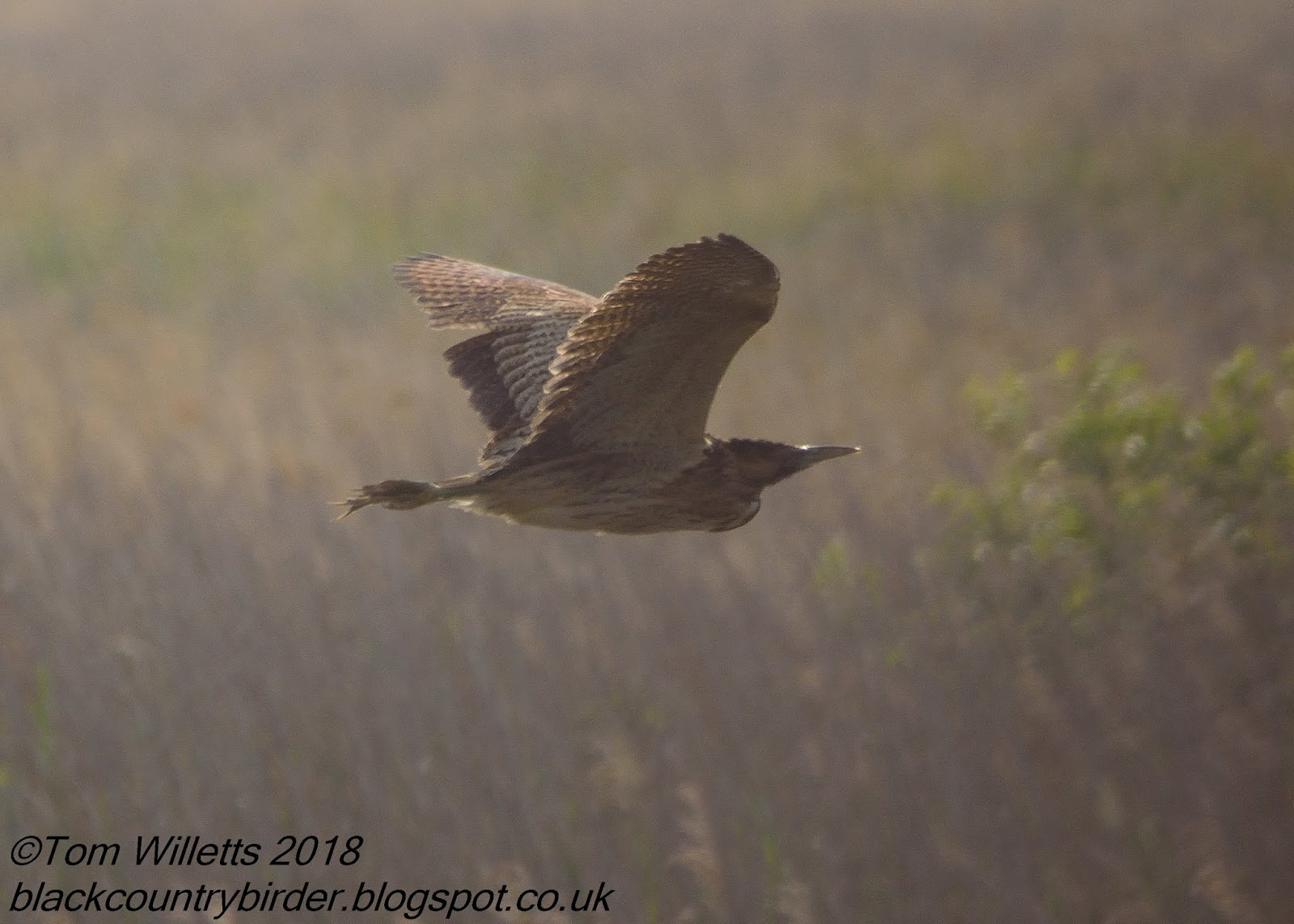
After lunch we boarded the bus to head for an ice cream on Naturetrek (and a rather welcome toilet stop, it was now about 6 hours since we left the boat!) But had to stop when this popped up by the bus! A Bittern!
Not a great shot as it was through the bus window, we didn't want to open the doors as it was so close. It did fly off after a few minutes, but at least the camera worked!

After our ice cream we started heading back to Tulcea, but with a few brief stops on the way, for a 
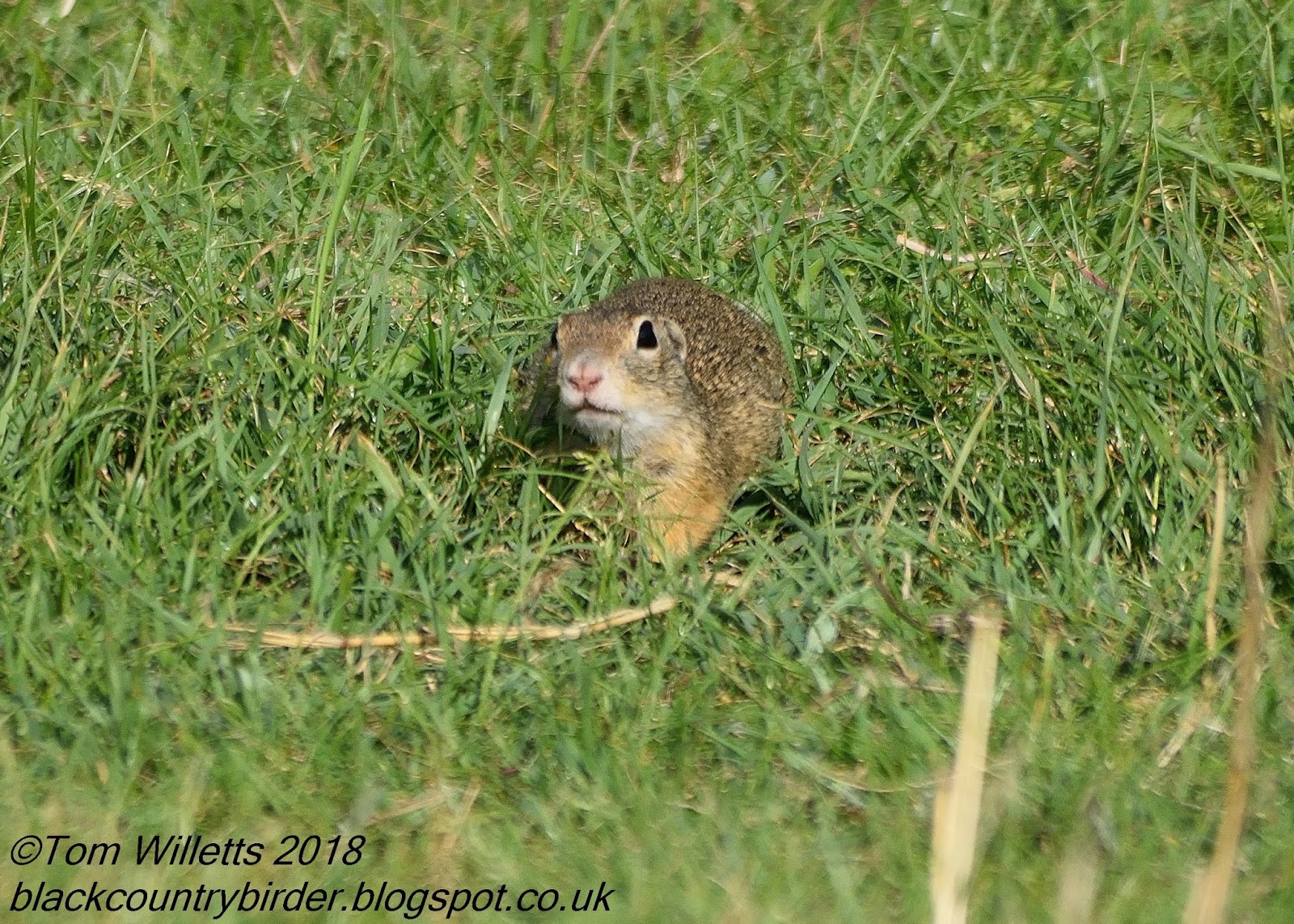
Suslik,
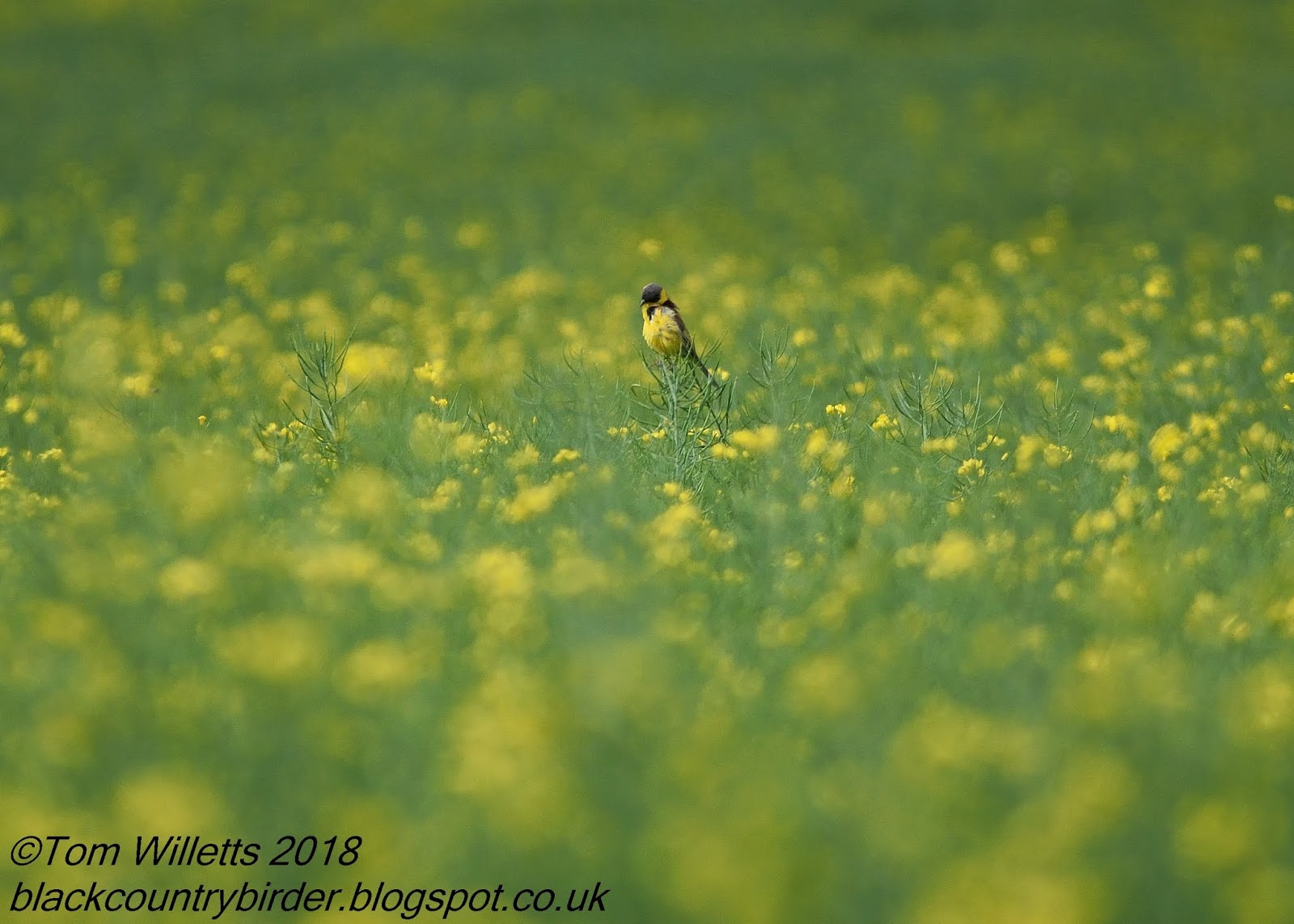
 Black-headed Bunting,
 and a star bird, Stone Curlew
 hence its name, pretending to be a stone!
Again I was lucky that the camera did intermittently work. Whilst looking at the Black-headed Bunting, we had our first ever Pallid Harrier, this time though the camera packed up! The same goes for the Calandra Lark and Isabeline Wheatear that we saw.

A bit later we were taken to a gorge where we found Pied Wheatear, Black Redstart, more Suslik and Ortolan Bunting. The camera managed to get a shot of the Wheatear,
 and another Suslik,
but refused to play ball for the Ortolan Bunting, very frustrating.

Very tired we made it to our guest house, with just about enough time to take our luggage to our room, unpack what we needed, freshen up, drink a beer (G&T for Tina) and make it down 5 minutes late to dinner!

Our last full day, saw us exploring up near the Ukraine border, the day started very hot again, we were searching for Sombre Tit in a thinly wooded area but they didn't show! Instead we saw a Levant's Sparrowhawk, Turtle Dove, Golden Oriole, Spotted Flycatcher, Booted Eagle and some other raptors (dots!!).

We stopped briefly at quite a few places after this, one for Wryneck, but they couldn't be found either, I did find a Paper Wasp though,
and while trying to get the camera going a few other non-bird items;


A woodland stop found another lifer for us, and this time another first time bird for us and a record photo, a Red-breasted Flycatcher.

We tried another place for Sombre Tit, but the weather was taking a turn for the worse, so we headed for one last stop at a Quarry to look for Rock Thrush, before heading back and packing etc.

Once at the quarry the rain eventually stopped and we stayed for a while looking for a Rock Thrush, the group split up, but we elected to stay near the bus and was glad to say I found the bird and was eventually able to direct the others on to it. At this point of course the camera refused to play ball. But we had some great views that was the main thing.

So finally the next day was the long drive back to Bucharest and the airport, we did have a bit of excitement though, in a woody area on the main road, about an hour into the journey, at a place where we had seen Bee-eater a week earlier, an Owl was seen. So the bus was stopped about a 100 yards up the road in a lay bay and we walked back and it was well worth out for our first Long-eared Owl, and as you can see the camera, for no apparent reason, worked!

As you can see the Owl is on a nest and if you look closely at the top photo, you can just see the grey of chicks to the right of the bird. Interestingly this Owl had chosen its nest site in the middle of a Rookery! This didn't seem to bother the Rooks at all..

So that's it. Of course I haven't mentioned every bird that we saw on the trip, that would be incredibly boring, but for those that are interested here our complete list:

Avocet  ("Recurvirostra avosetta")
Bearded Tit  ("Panurus biarmicus")
Bee-eater  ("Merops apiaster")
Bittern  ("Botaurus stellaris")
Black Redstart  ("Phoenicurus ochruros")
Black Tern  ("Chlidonias niger")
Black Woodpecker  ("Dryocopus martius")
Blackbird  ("Turdus merula")
Blackcap  ("Sylvia atricapilla")
Black-headed Bunting  ("Emberiza melanocephala")
Black-headed Gull  ("Chroicocephalus ridibundus")
Black-necked Grebe  ("Podiceps nigricollis")
Black-tailed Godwit  ("Limosa limosa")
Black-winged Stilt  ("Himantopus himantopus")
Blue Tit  ("Cyanistes caeruleus")
Booted Eagle  ("Hieraaetus pennatus")
Broad-billed Sandpiper  ("Limicola falcinellus")
Buzzard  ("Buteo buteo")
Calandra Lark  ("Melanocorypha calandra")
Caspian Gull  ("Larus cachinnans")
Caspian Tern  ("Hydroprogne caspia")
Chaffinch  ("Fringilla coelebs")
Collared Dove  ("Streptopelia decaocto")
Collared Flycatcher  ("Ficedula albicollis")
Collared Pratincole  ("Glareola pratincola")
Common Crossbill  ("Loxia curvirostra")
Common Sandpiper  ("Actitis hypoleucos")
Common Tern  ("Sterna hirundo")
Coot  ("Fulica atra")
Cormorant  ("Phalacrocorax carbo")
Corn Bunting  ("Emberiza calandra")
Crested Lark  ("Galerida cristata")
Cuckoo  ("Cuculus canorus")
Curlew Sandpiper  ("Calidris ferruginea")
Dalmatian Pelican  ("Pelecanus crispus")
Dipper  ("Cinclus cinclus")
Ferruginous Duck  ("Aythya nyroca")
Firecrest  ("Regulus ignicapilla")
Gadwall  ("Anas strepera")
Garganey  ("Anas querquedula")
Glossy Ibis  ("Plegadis falcinellus")
Golden Oriole  ("Oriolus oriolus")
Goldeneye  ("Bucephala clangula")
Great Black-headed Gull  ("Larus ichthyaetus")
Great Crested Grebe  ("Podiceps cristatus")
Great Reed Warbler  ("Acrocephalus arundinaceus")
Great Spotted Woodpecker  ("Dendrocopos major")
Great Tit  ("Parus major")
Great White Egret  ("Ardea alba")
Great White Pelican  ("Pelecanus onocrotalus")
Greenfinch  ("Chloris chloris")
Greenshank  ("Tringa nebularia")
Grey Heron  ("Ardea cinerea")
Grey Partridge  ("Perdix perdix")
Grey Plover  ("Pluvialis squatarola")
Grey Wagtail  ("Motacilla cinerea")
Grey-headed Woodpecker  ("Picus canus")
Greylag Goose  ("Anser anser")
Hawfinch  ("Coccothraustes coccothraustes")
Hobby  ("Falco subbuteo")
Honey-buzzard  ("Pernis apivorus")
Hooded Crow  ("Corvus cornix")
Hoopoe  ("Upupa epops")
House Martin  ("Delichon urbicum")
House Sparrow  ("Passer domesticus")
Icterine Warbler  ("Hippolais icterina")
Isabelline Wheatear  ("Oenanthe isabellina")
Jackdaw  ("Corvus monedula")
Jay  ("Garrulus glandarius")
Kentish Plover  ("Charadrius alexandrinus")
Kestrel  ("Falco tinnunculus")
Kingfisher  ("Alcedo atthis")
Lapwing  ("Vanellus vanellus")
Lesser Grey Shrike  ("Lanius minor")
Lesser Spotted Eagle  ("Aquila pomarina")
Lesser Whitethroat  ("Sylvia curruca")
Levant Sparrowhawk  ("Accipiter brevipes")
Linnet  ("Carduelis cannabina")
Little Bittern  ("Ixobrychus minutus")
Little Egret  ("Egretta garzetta")
Little Gull  ("Hydrocoloeus minutus")
Little Ringed Plover  ("Charadrius dubius")
Little Stint  ("Calidris minuta")
Little Tern  ("Sternula albifrons")
Long-eared Owl  ("Asio otus")
Long-legged Buzzard  ("Buteo rufinus")
Long-tailed Tit  ("Aegithalos caudatus")
Magpie  ("Pica pica")
Mallard  ("Anas platyrhynchos")
Marsh Harrier  ("Circus aeruginosus")
Marsh Sandpiper  ("Tringa stagnatilis")
Mistle Thrush  ("Turdus viscivorus")
Montagu's Harrier  ("Circus pygargus")
Moorhen  ("Gallinula chloropus")
Mute Swan  ("Cygnus olor")
Night-heron  ("Nycticorax nycticorax")
Nightingale  ("Luscinia megarhynchos")
Nutcracker  ("Nucifraga caryocatactes")
Nuthatch  ("Sitta europaea")
Ortolan Bunting  ("Emberiza hortulana")
Paddyfield Warbler  ("Acrocephalus agricola")
Pallid Harrier  ("Circus macrourus")
Penduline Tit  ("Remiz pendulinus")
Pheasant  ("Phasianus colchicus")
Pied Wagtail  ("Motacilla alba")
Pied Wheatear  ("Oenanthe pleschanka")
Pochard  ("Aythya ferina")
Purple Heron  ("Ardea purpurea")
Pygmy Cormorant  ("microcarbo pygmeus")
Raven  ("Corvus corax")
Red-backed Shrike  ("Lanius collurio")
Red-breasted Flycatcher  ("Ficedula parva")
Red-crested Pochard  ("Netta rufina")
Red-footed Falcon  ("Falco vespertinus")
Red-necked Grebe  ("Podiceps grisegena")
Redshank  ("Tringa totanus")
Redstart  ("Phoenicurus phoenicurus")
Reed Bunting  ("Emberiza schoeniclus")
Reed Warbler  ("Acrocephalus scirpaceus")
Ringed Plover  ("Charadrius hiaticula")
Rock Dove / Feral Pigeon  ("Columba livia")
Rock Thrush  ("Monticola saxatilis")
Roller  ("Coracias garrulus")
Rook  ("Corvus frugilegus")
Ruddy Shelduck  ("Tadorna ferruginea")
Ruff  ("Philomachus pugnax")
Sand Martin  ("Riparia riparia")
Sandwich Tern  ("Sterna sandvicensis")
Savi's Warbler  ("Locustella luscinioides")
Serin  ("Serinus serinus")
Shelduck  ("Tadorna tadorna")
Shoveler  ("Anas clypeata")
Sombre Tit  ("Poecile lugubris")
Song Thrush  ("Turdus philomelos")
Spanish Sparrow  ("Passer hispaniolensis")
Sparrowhawk  ("Accipiter nisus")
Spoonbill  ("Platalea leucorodia")
Spotted Flycatcher  ("Muscicapa striata")
Spotted Redshank  ("Tringa erythropus")
Squacco Heron  ("Ardeola ralloides")
Starling  ("Sturnus vulgaris")
Stock Dove  ("Columba oenas")
Stone-curlew  ("Burhinus oedicnemus")
Swallow  ("Hirundo rustica")
Swift  ("Apus apus")
Syrian Woodpecker  ("Dendrocopos syriacus")
Tawny Pipit  ("Anthus campestris")
Temminck's Stint  ("Calidris temminckii")
Tree Pipit  ("Anthus trivialis")
Tree Sparrow  ("Passer montanus")
Tufted Duck  ("Aythya fuligula")
Turtle Dove  ("Streptopelia turtur")
Wallcreeper  ("Tichodroma muraria")
Wheatear  ("Oenanthe oenanthe")
Whinchat  ("Saxicola rubetra")
Whiskered Tern  ("Chlidonias hybrida")
White Stork  ("Ciconia ciconia")
White-tailed Eagle  ("Haliaeetus albicilla")
Whitethroat  ("Sylvia communis")
White-winged Black Tern  ("Chlidonias leucopterus")
Willow Warbler  ("Phylloscopus trochilus")
Wood Sandpiper  ("Tringa glareola")
Wood Warbler  ("Phylloscopus sibilatrix")
Woodpigeon  ("Columba palumbus")
Yellow Wagtail  ("Motacilla flava")
Yellowhammer  ("Emberiza citrinella")
Yellow-legged Gull  ("Larus michahellis")